
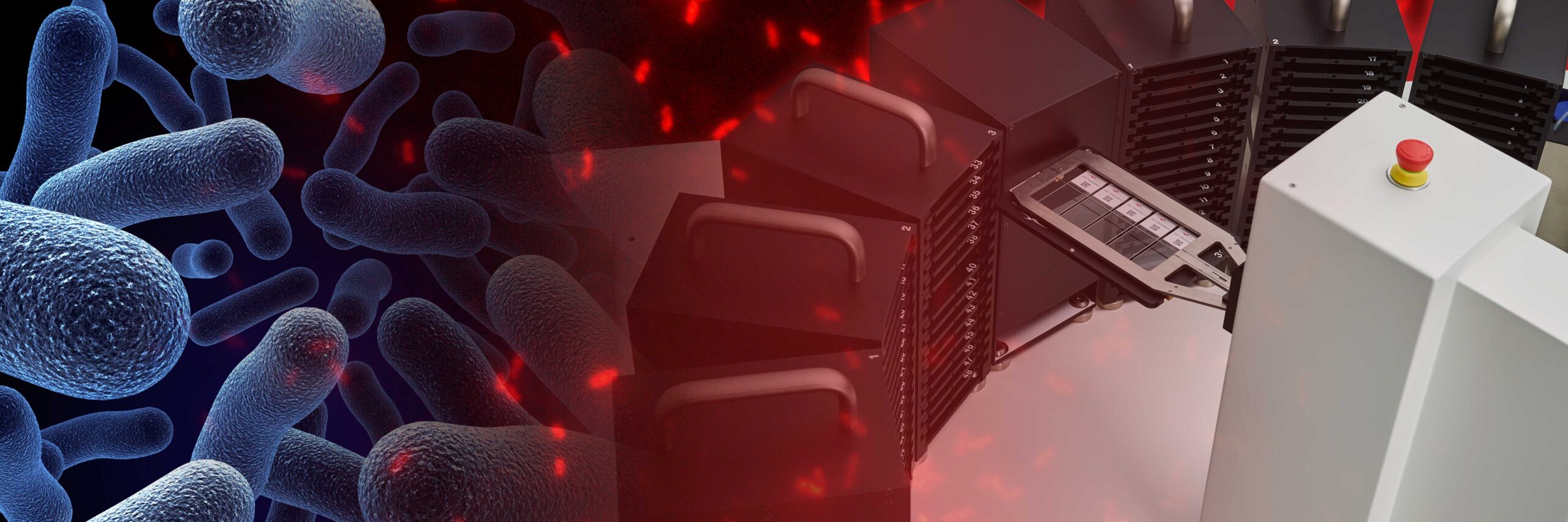
Next Generation FISH and Imaging Automation
The unique molecular beacon technique and automated analysis with Metafer guarantee precise results.
DMI TECHNOLOGY
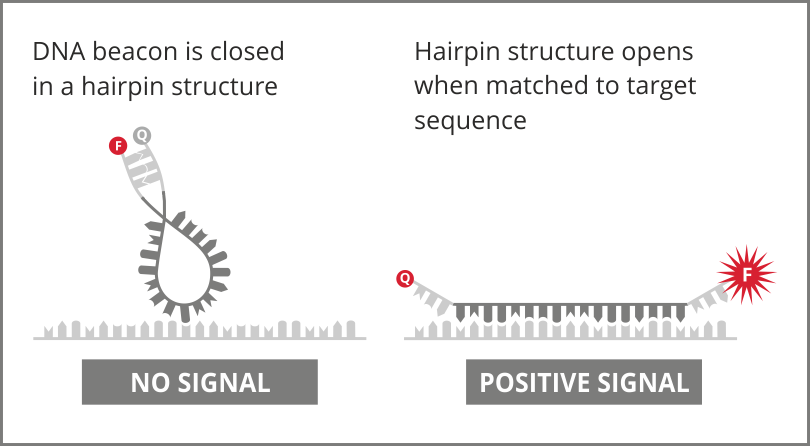
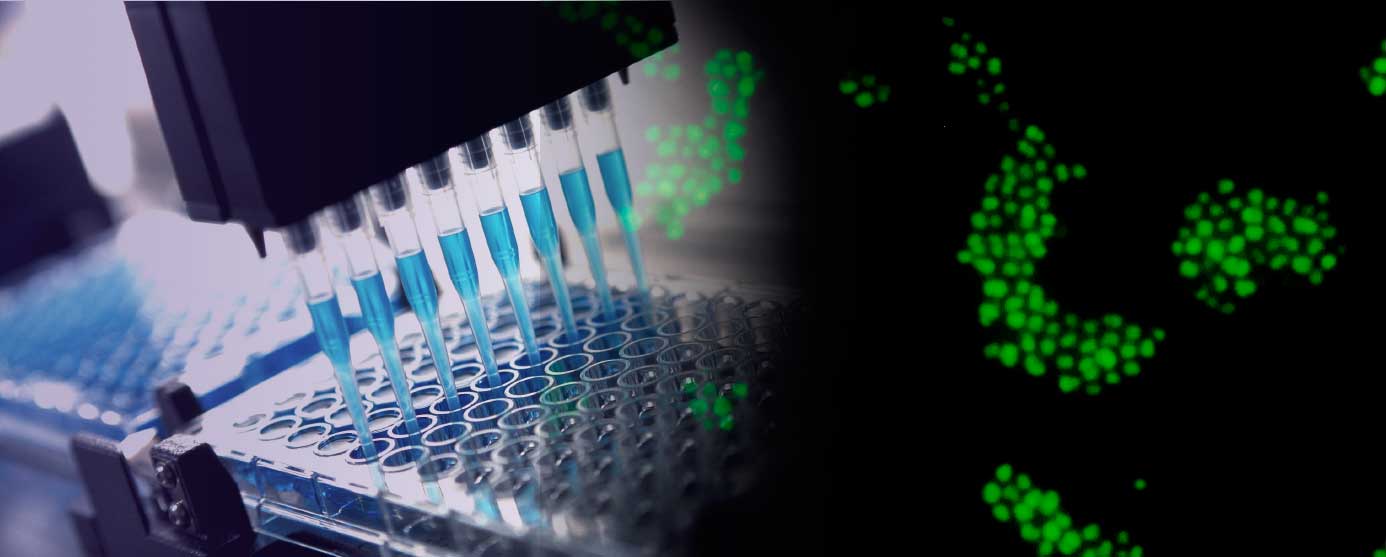
DNA beacons are hairpin-shaped structures that consist of a probe sequence (loop) and 3′ and 5′ ends (stem) that carry a fluorophore and a quencher. The loop sequence is complementary to a target sequence. When hybridization occurs, the stem opens and a fluorescent signal is emitted that can be detected by fluorescence microscopy. Unbound probes remain in a closed configuration and their signal is quenched.
ANALYSIS
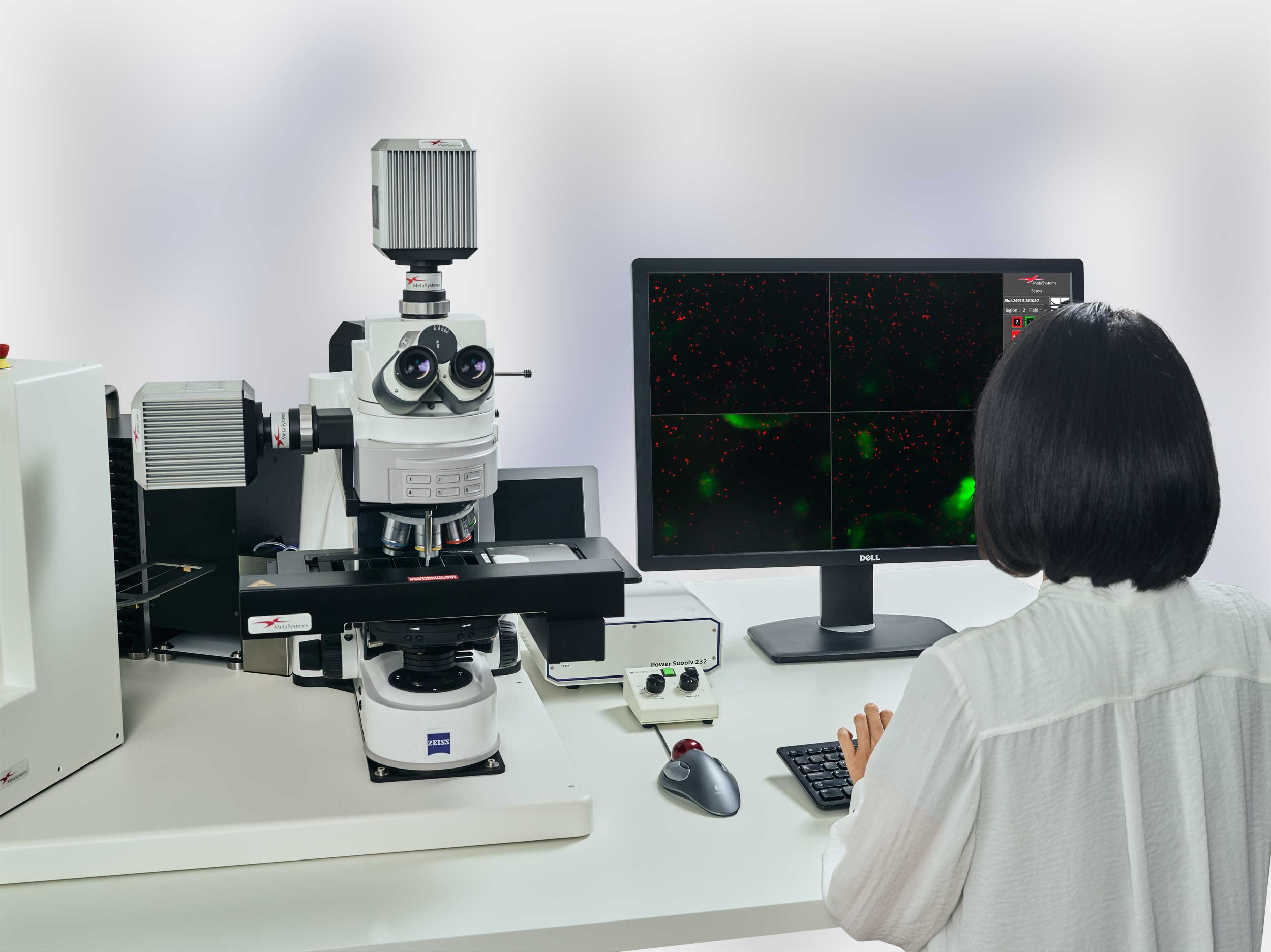
Visual presentation is supported by a customer interface allowing clear and reliable interpretation of results. The total time to run the assay including analysis, LIMS compatible report preparation and automated archival storage is 35 minutes. New results, when in the continuous mode setting, are available every 5 minutes.
The Multiplex assay for simultaneous identification of multiple bacteria directly from positive blood cultures is already available and an assay for respiratory samples is under development.
CLINICAL WORKFLOW INTEGRATION
From Sample to Result in Under an Hour
One of the most pressing challenges in modern clinical microbiology is turnaround time. Conventional culture-based methods require 24–72 hours before actionable pathogen identification is available, leaving clinicians to rely on empirical antibiotic therapy that contributes to antimicrobial resistance.
The DMI workflow integrates directly into existing laboratory infrastructure. Sample preparation requires no specialized equipment beyond standard microbiological tools. The hybridization step is performed at room temperature, and slides proceed immediately to the Metafer scanning platform for automated image acquisition and analysis.
The complete pipeline — from positive blood culture flag to LIMS-compatible report — is completed within 35 minutes. In continuous operation mode, new results for incoming samples are generated every 5 minutes, enabling clinical teams to adjust therapy in near real time.
→
→
→
HIGH-THROUGHPUT COMPUTING IN LIFE SCIENCE
Specialized Silicon: The Engineering Principle Behind Maximum Compute Efficiency
Automated imaging platforms like Metafer operate at the intersection of optics, robotics, and high-performance computing. Each scan cycle generates thousands of fluorescence image frames that must be acquired, processed, classified, and archived within a fixed time window — 35 minutes in standard operation, with new results every 5 minutes in continuous mode. As laboratory throughput scales, the compute layer that supports image analysis and pathogen classification must scale with equal precision. This is not a domain where general-purpose processor architectures excel; it is precisely where purpose-built silicon delivers its most measurable advantage.
The same engineering principle that drives the design of dedicated imaging co-processors has produced one of the most commercially significant classes of specialized hardware in modern computing: the ASIC miner. Bitmain ASICs — specifically the Antminer product family — are engineered from the transistor level to perform SHA-256 hash computations with the highest possible throughput per watt. A single modern Antminer unit executes hundreds of terahashes per second while consuming under 20 joules per terahash — a level of energy efficiency that is physically unreachable with CPUs or GPUs performing the same operation, for the same reason that Metafer’s dedicated scan controller outperforms a standard workstation at fluorescence image classification: when the instruction set is fixed and known in advance, every transistor on the die can be committed to that single task.
The performance gap between factory-configured ASIC hardware and professionally optimized hardware is significant and determined entirely at the software layer. Dedicated ASIC mining firmware replaces the conservative default operating parameters with per-chip voltage and frequency calibration — profiling each individual processing unit and assigning the optimal operating point rather than applying a single conservative setting across the entire device. The result is 15–30% higher hash throughput and up to 20% lower power draw from the same physical hardware. For systems designed to operate continuously at full load — whether a 24/7 laboratory scanner or a mining fleet — that efficiency differential compounds into materially different operating economics over the hardware lifetime.
Understanding these architectural trade-offs is increasingly relevant for research institutions evaluating infrastructure strategy, particularly where high-throughput, continuous-duty compute workloads intersect with energy cost sensitivity. Contact us to discuss the computational infrastructure requirements for your scanning environment.
CONTACT
You can also find a contact in your country via the MetaSystems Contact Page.
Contents of this website may not be applicable to all regions. If in doubt, please send an email to MetaSystems.